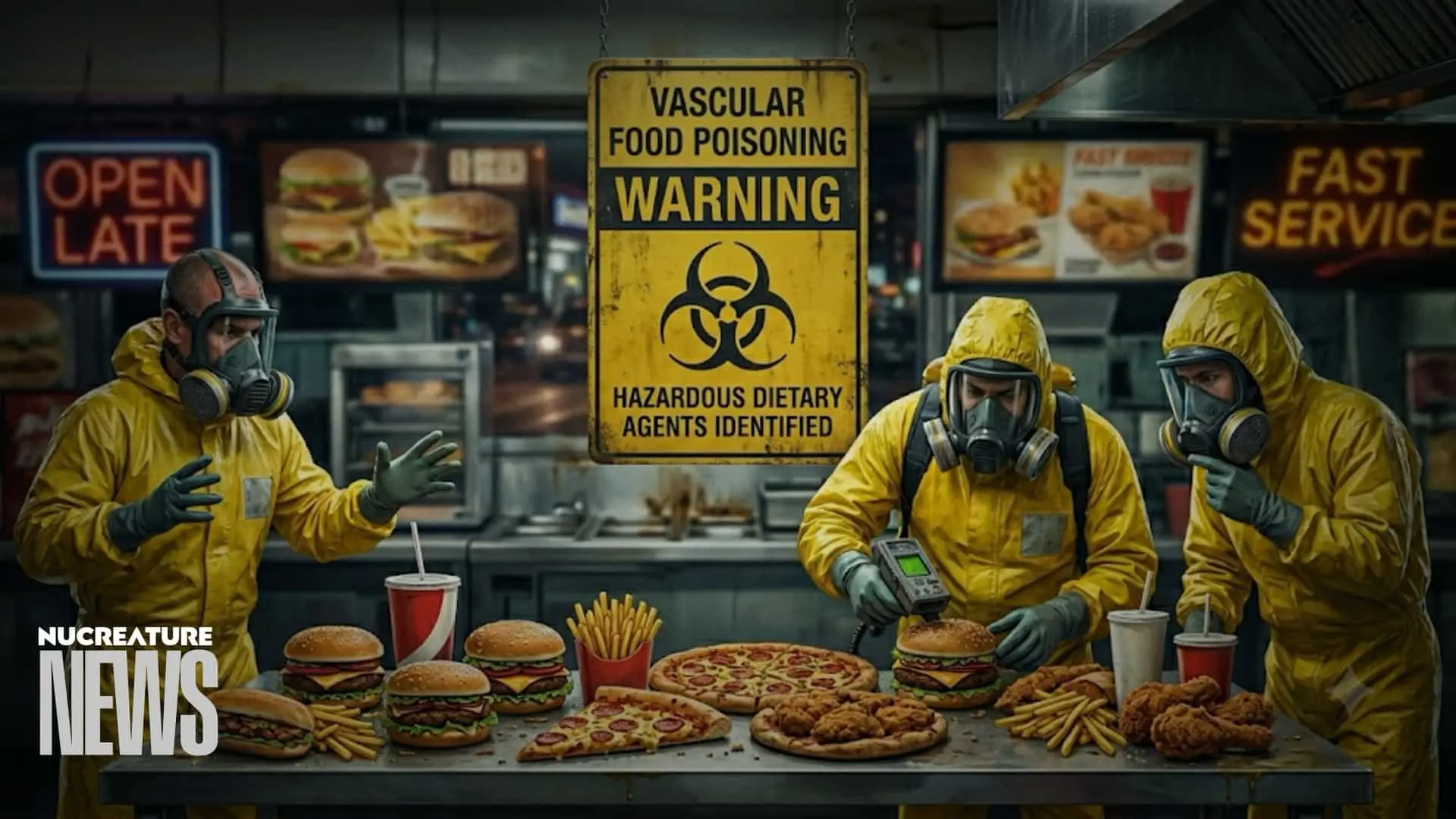
What’s vascular food poisoning? It’s food that was created with the intent to kill through heart attack causing ingredients. In this post, I will discuss these ingredients and how they can imminently lead to death. Because let’s face it, the Devil and his food industry, come to steal, kill and destroy. (John 10:10)
But, Yeshua The Messiah comes so that you will have life. Physically and spiritually. You have to take care of the temple (body) God gave you by not allowing these people to poison you through food.
Surviving Fast-Food: Dunkin’ Doughnuts and McDonald’s
In today’s fast-paced world, we often need to grab a quick bite when we’re on the go. For many people juggling hectic schedules, hitting up a drive-thru like Dunkin’ or McDonald’s seems like the only option.
But for those looking to keep their vascular health in check or reduce the risk of ischemia—a serious blockage of blood flow and oxygen to important organs—these quick stops can become a dietary challenge.
The good news is that keeping your arteries healthy and flexible doesn’t mean you have to avoid eating out entirely. By learning what’s happening behind the counter, you can turn a risky food choice into a smart, heart-friendly decision.
“Don’t you know that your body is a temple for the Ruach HaKodesh who lives inside you, whom you received from God? The fact is, you don’t belong to yourselves; for you were bought at a price. So use your bodies to glorify God.”
— 1 Corinthians 6:19-20 (Complete Jewish Bible)
Unmasking the Lethal Sodium Traps Stifling Your Blood Flow
The primary antagonist in the fast-food narrative isn’t always calories; it’s the staggering, invisible surplus of sodium. Processed fast-food items are meticulously engineered with high salt content to extend their shelf life and enhance their flavor profiles.
Consuming a high-sodium meal triggers your body’s rapid response to draw water into your bloodstream to balance the excess. This sudden influx expands blood volume, creating intense pressure against your arterial walls.
Over time, this chronic stress can lead to endothelial dysfunction—the stiffening and narrowing of blood vessels—which significantly increases the risk of ischemic events like heart attacks or strokes [1].Consider the breakfast routine.
A seemingly innocuous breakfast sandwich, built on a commercial biscuit or croissant, can easily deliver over 1,000 milligrams of sodium in just a few minutes. When paired with processed breakfast meats like pork sausage or bacon, which are loaded with artery-clogging saturated fats, the vascular system experiences an immediate inflammatory spike. For individuals who are proactive about protecting their blood flow, recognizing these sodium traps is the crucial first step toward long-term vascular preservation.
Strategic Slashes: How to Deconstruct and Conquer the Breakfast Menu
You can effectively disarm the drive-thru menu by utilizing smart, intentional modifications. Take a popular standard option like a breakfast wrap or a turkey sausage wake-up route. Choosing processed turkey over standard pork sausage or bacon is an excellent initial strategy because it significantly reduces the amount of saturated fat entering your system. Saturated fats are notorious for accelerating atherosclerosis—the accumulation of fatty plaques that directly trigger ischemia [2].
However, processed turkey sausage still retains a heavy sodium footprint, frequently pushing individual items past 680 milligrams of sodium per serving. To master your order and protect your cardiovascular architecture, apply these practical adjustments:
- Banish the Cheese: Axing the slice of processed cheese instantly cuts down 100 to 150 milligrams of sodium and removes unnecessary saturated fats.
- Ditch the Heavy Breads: Opt for thin tortilla wraps or a plain English muffin instead of croissants or buttery biscuits, which are inherently high in shortening and sodium.
-
Select Antioxidant-Rich Beverages: Swap sugary coffee syrups and sodas for unsweetened iced green tea or black coffee. Green tea is rich in catechins, which are powerful plant compounds proven to enhance nitric oxide production, helping to relax and dilate blood vessels naturally [3].
Vascular Health Metric Check:
The American Heart Association recommends an ideal daily limit of 1,500 mg of sodium for adults, particularly those monitoring blood pressure or vascular health. A single un-modified fast-food wrap can claim nearly half of your entire daily allowance before noon [1]. Small modifications preserve your budget and protect your arterial health.
Honoring the Temple Through Daily Stewardship
Ultimately, treating your body with reverence requires mindful execution in every arena of life, including the drive-thru lane. As believers, managing our cardiovascular health is a profound exercise in stewardship, enabling us to sustain the strength required to fulfill our callings. By implementing simple, disciplined boundaries—such as holding the cheese, bypassing high-fructose flavor swirls, and seeking out healthy monounsaturated fats like avocado—we actively guard the vascular systems God designed. Eating on the go no longer has to compromise your physical well-being. Armed with the right strategy, you can confidently protect your blood vessels and maintain peak health wherever the road takes you.
Cited Sources & References
- American Heart Association. (2024). Sodium and Cardiovascular Disease Risk. AHA Clinical Guidelines.
- National Institutes of Health. (2025). Atherosclerosis and Ischemic Heart Disease Prevention. NHLBI Reports.
- Journal of Nutritional Biochemistry. (2023). The Impact of Green Tea Catechins on Endothelial Function and Nitric Oxide Production.