
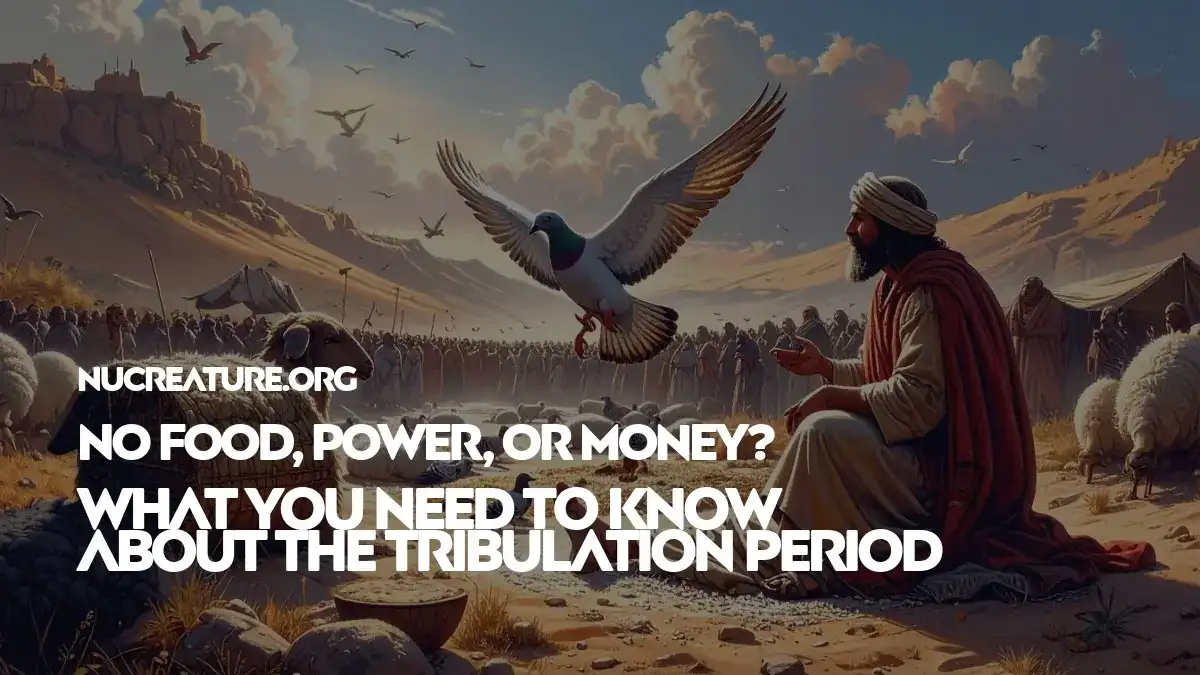
What Is “the Time of Jacob’s Trouble”?
Few phrases in Bible prophecy carry as much weight as “the time of Jacob’s trouble.” It points to a season of unparalleled distress for Israel, and it also carries one of the most powerful promises of rescue in all of Scripture. Understanding where it comes from helps us see why it matters, and why so many believers believe it is still unfolding.
Where “Jacob’s Trouble” Comes From
The phrase comes from the prophet Jeremiah, who spoke during the final days of the Kingdom of Judah, before Babylon destroyed Jerusalem in 586 B.C. Alongside his warnings of judgment and exile, Jeremiah delivered a message of hope for the descendants of Jacob, the man God renamed Israel in Genesis 32:28.

“These are the words Adonai spoke concerning Isra’el and Y’hudah: Ask now and see: can men give birth to children? Why, then, do I see all the men with their hands on their stomachs like women in labor, with every face turned pale? How dreadful that day will be! — there has never been one like it: a time of trouble for Ya’akov, but out of it he will be saved.”
— Yirmeyahu (Jeremiah) 30:4, 6–7 WMB
The World Messianic Bible words the same passage this way:
“Alas! for that day is great, so that there is none like it. It is even the time of Jacob’s trouble; but he will be saved out of it.”
— Jeremiah 30:7, WMB
Jacob’s Trouble in the Old Testament
In its original setting, Jeremiah was warning of the coming Babylonian captivity. The “trouble” was the suffering, death, and exile that would fall on Judah because the people had broken faith with God’s covenant. The picture of strong men gripping their stomachs like a woman in labor shows how helpless and anguished the nation would be.
But the verse does not end in despair. It closes with the promise that Jacob “will be saved out of it.” Even in the depths of judgment, God was already planning deliverance and restoration for His people.
Jacob’s Trouble and Future End-Time Prophecy
The Babylonian exile was a real fulfillment, but many Bible teachers see a second, future fulfillment. They believe Jeremiah’s words also point to a coming period of unmatched tribulation for Israel, which will come before the final redemption at the return of the Messiah.
They connect Jeremiah with Daniel 12:1, which describes “a time of trouble, such as never was since there was a nation even to that same time” (WMB). They also connect it with Jesus’ words in the Olivet Discourse.
Jacob’s Trouble in the New Testament
“For then there will be great suffering, such as has not been from the beginning of the world until now, no, and never will be.”
— Matthew 24:21, WMB
In this view, Jacob’s trouble and the Great Tribulation describe the same event: a final season of intense persecution for Israel, ended when the Messiah steps in to rescue His people.
Why Does Israel Face Trouble? A Covenant People
Israel’s story of affliction is tied to its calling. When God called Abraham and made a covenant with his descendants, He set them apart to be a kingdom of priests and a holy nation (Exodus 19:6). Through them the knowledge of the one true God, and ultimately the Messiah, would reach the whole world.
That covenant carried both blessings and consequences. Deuteronomy 28 spells it out: obedience would bring prosperity, security, and victory, while turning away from God would bring famine, disease, defeat, and exile from the land.
Scripture presents Israel’s repeated troubles as the painful results of that turning away. These include Egyptian bondage, the Assyrian and Babylonian exiles, and the destruction of the Second Temple by Rome in A.D. 70, followed by the scattering of the people.
Yet every warning of judgment came with a promise of faithfulness. God would discipline His people, but He would never cast them off completely (Jeremiah 31:35–37).
The Hope Inside the Trouble
The purpose of Israel’s suffering was always redemptive. God used it to draw His people toward repentance and to show that He has the power to preserve and restore them. For Christians, this story shows God’s sovereignty and covenant love, and it points to Jesus the Messiah, who offers salvation to everyone who believes.
The same God who promised that Jacob would be saved out of his trouble keeps every promise He makes.

You must be logged in to post a comment.