
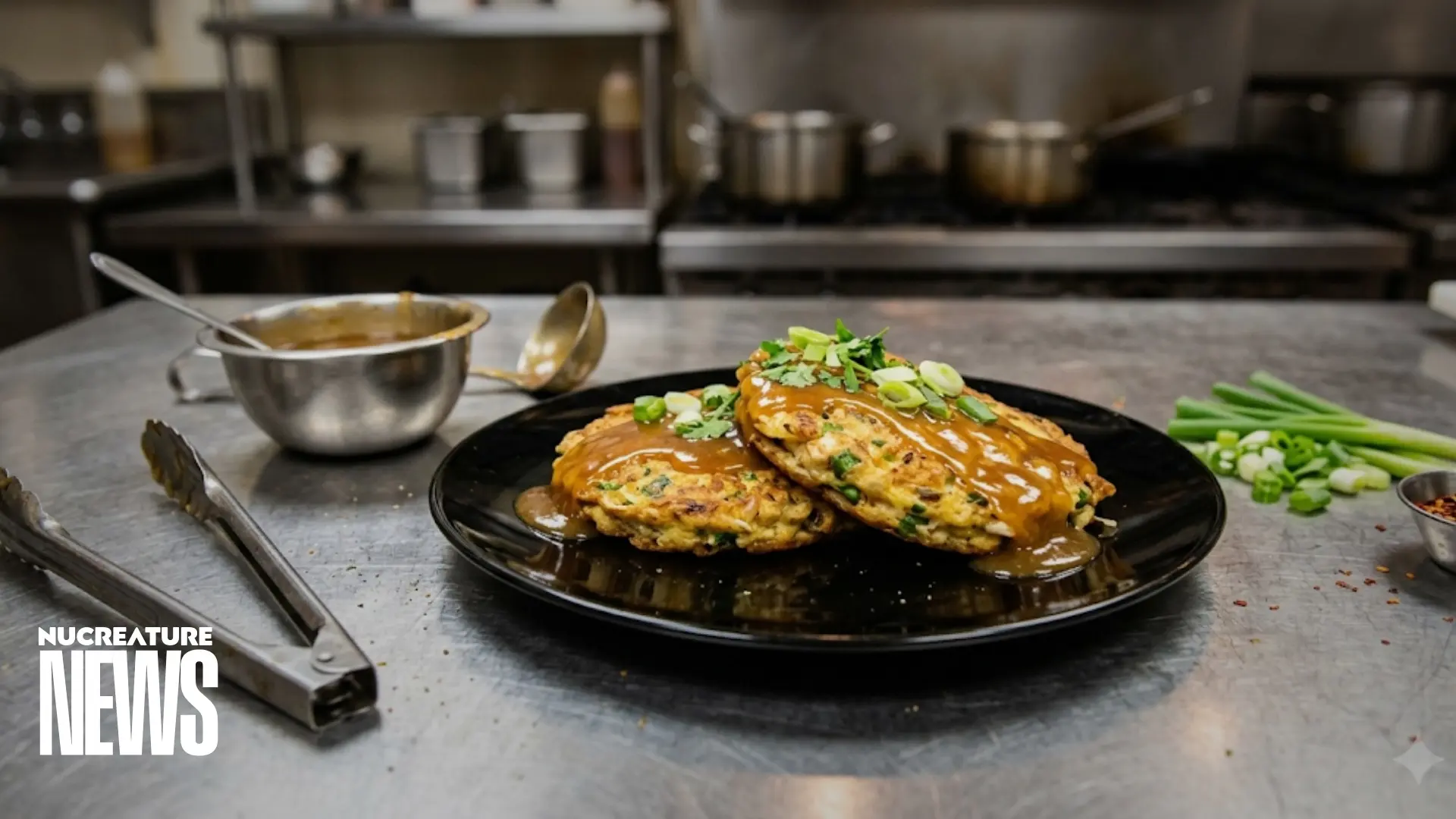
If you’re like me, you love Chicken Egg Foo Young. Those crispy, golden egg patties packed with tender chicken and crunchy bean sprouts, smothered in a rich, velvety brown gravy—it is comfort food at its finest.
But if you are keeping an eye on your cardiovascular health like I’am or managing your salt intake, ordering this classic dish from your local Chinese restaurant can feel like a high-stakes gamble.
Let’s dive into exactly where the sodium hides in traditional takeout, and how you can reclaim this savory favorite at home without sacrificing an ounce of flavor.
Chicken Egg Foo Young: Insane Sodium
The short answer is straightforward: traditional restaurant Chicken Egg Foo Young is incredibly high in sodium. A standard serving typically packs between 1,000 mg and 1,900 mg of sodium.
When you consider that the USDA recommended daily limit for adults is 2,300 mg, a single takeout container can easily wipe out 40% to 82% of your entire salt allowance for the day. That’s a deadly recipe for a heart related event.
Chicken Egg Foo Young: There’s Hope
However, the sodium isn’t distributed evenly throughout the dish. To make smart choices, you have to look at where the salt actually hides:
- The Poisonous Gravy: The dark, deeply savory gravy served over Egg Foo Young accounts for roughly 60% to 70% of the total sodium in the entire meal. It is traditionally built on a foundation of heavy soy sauce, oyster sauce, and conventional chicken broth. A single half-cup of standard restaurant gravy can easily contain 800 mg to 1,000 mg of sodium all by itself.
- The Omelet Patties: By contrast, a single plain chicken egg foo young patty—made of eggs, chicken, onions, sprouts, and basic seasonings—contains a much more manageable 300 mg to 340 mg of sodium.
Chicken Egg Foo Young: Restaurant vs. Homemade
| Component / Style | Average Sodium (mg) | Impact on Daily Value (2,300 mg limit) |
| 1 Plain Takeout Patty (No Gravy) | ~335 mg | Low to Moderate (~14%) |
| Typical Restaurant Serving (with Gravy) | ~1,890 mg | Extremely High (~82%) |
| Homemade Low-Sodium Version (2 Patties + Gravy) | ~350 mg | Low (~15%) |
Strategy Session: Ordering Smart at the Counter
If you find yourself at your favorite local spot and the craving hits, you don’t have to completely veto your order. You can slash the sodium content by more than half with a few precise modifications:
The “On the Side” Rule: Always request the gravy on the side. Dipping your fork into the sauce or lightly drizzling a single tablespoon over the top gives you the flavor experience without letting the patties absorb hundreds of milligrams of excess salt.
Alternatively, you can skip the gravy altogether and finish the plain patties with a light splash of reduced-sodium soy sauce mixed with rice vinegar. This introduces a bright, sharp contrast that complements the rich eggs perfectly.
The Ultimate Flavor Swap: Better-Than-Takeout Homemade Recipe
The most effective way to enjoy this dish with total peace of mind is to control the ingredients yourself. This homemade recipe replaces the salt heavy hitters with low-sodium broth, a reduced-sodium soy sauce swap, and an abundance of fresh aromatics (garlic, ginger, and green onions) to deliver that authentic, glossy takeout profile.
A full serving of this recipe (2 large patties with gravy) contains roughly 350 mg to 400 mg of sodium, allowing you to protect your health while enjoying a spectacular meal.
Ingredients
For the Savory Gravy:
- 1 cup low-sodium, no-salt-added chicken broth
- 1 tbsp reduced-sodium soy sauce (or liquid aminos)
- 1 tsp toasted sesame oil
- 1/2 tsp garlic powder
- 1/4 tsp ground ginger
- 1 tbsp cornstarch mixed with 1 tbsp cold water (to form a slurry)
- Optional: A pinch of white pepper or a tiny dash of rice vinegar for brightness
For the Crispy Patties:
- 4 large eggs
- 1 cup cooked chicken breast, shredded or finely diced (ensure it isn’t heavily pre-salted)
- 1 cup fresh mung bean sprouts, rinsed and thoroughly dried
- 1/2 cup yellow onion, finely diced
- 3 green onions (scallions), thinly sliced
- 1/2 tsp garlic powder
- 2 tbsp avocado oil or vegetable oil (divided, for frying)
Culinary Execution
1.Whisk and Thicken the Gravy:5 mins.
In a small saucepan, combine the chicken broth, reduced-sodium soy sauce, sesame oil, garlic powder, and ground ginger. Bring to a simmer over medium heat. Whisk in the cornstarch slurry and stir constantly for 1 to 2 minutes until the gravy thickens and turns glossy. Turn the heat to low to keep it warm.
2.Build the Egg Base:3 mins.
In a large mixing bowl, crack the 4 eggs and whisk them vigorously until completely smooth and slightly frothy. Stir in the garlic powder.
3.Fold in the Fresh Fillings:2 mins.
Add the diced chicken, bean sprouts, yellow onion, and most of the green onions to the eggs (reserve a few green onion tops for a fresh garnish later). Fold everything together gently with a spatula until the ingredients are completely coated.
4.Fry the Golden Patties:6-8 mins.
Heat 1 tablespoon of oil in a large non-stick skillet or wok over medium-high heat. Ladle about a half-cup of the egg mixture into the pan to form a round patty (you can comfortably cook 2 at a time). Let it cook undisturbed for 2 to 3 minutes until the bottom is deeply golden brown and the edges start to set.
5.Flip and Cross the Finish Line:2-3 mins.
Carefully flip the patties over and cook the reverse side for another 2 minutes until the center is set and the chicken is hot. Remove to a serving plate, add the remaining tablespoon of oil to the pan, and repeat the process for the final two patties.
Pro-Tip for Kitchen Success: Mung bean sprouts retain an incredible amount of water, which can water down your egg base. Ensure they are thoroughly padded dry with a paper towel before folding them into the batter. If your patty begins to spread a bit too thin when it hits the hot oil, simply use your spatula to gently corral the stray egg back toward the center during the first 30 seconds of cooking.
To serve, stack the warm, crispy patties high, drizzle a few tablespoons of the warm, glossy gravy across the top, and scatter your remaining fresh green onions over the dish. You get all of the crunch, warmth, and savory satisfaction of your favorite restaurant style—with none of the nutritional regret.