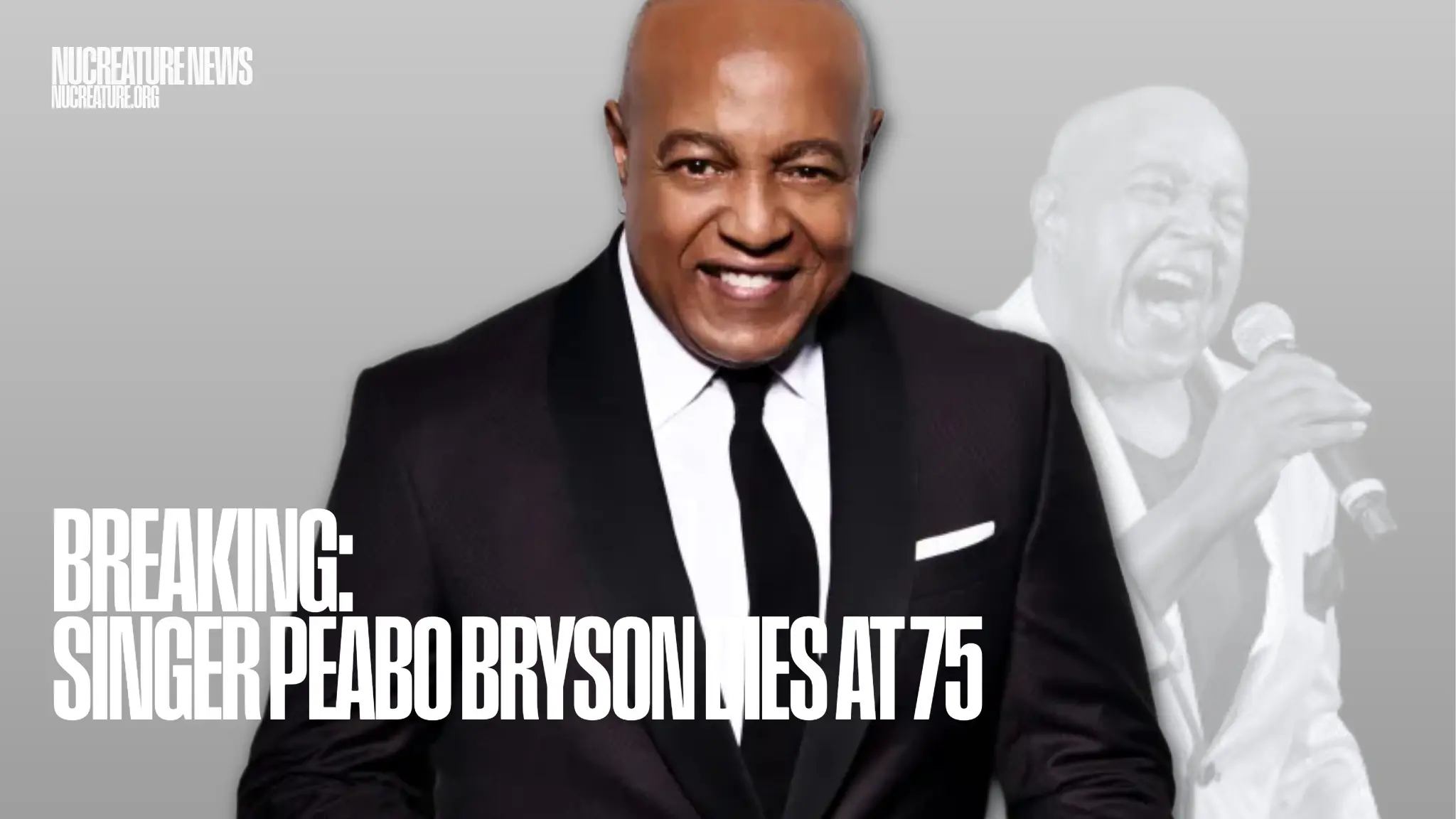
The music world is mourning the loss of an extraordinary voice. Robert Peapo Bryson, aka “Peabo Bryson”, the legendary balladeer who defined an era of romance with his sweeping duets and iconic Disney anthems, passed away on Tuesday, June 2, at the age of 75. His family confirmed that he died peacefully surrounded by loved ones, just days after suffering a stroke.
Peabo Bryson’s Family Statement
In a statement shared with PEOPLE, Bryson’s family expressed deep gratitude for the global outpouring of affection:
“While our hearts are broken, we find comfort in knowing how deeply Peabo was loved and how many lives were touched by his voice and his generous spirit. His legacy and music will live on for generations to come.”
An eight-time Grammy nominee, Bryson possessed a rare, velvet tenor that bridged the worlds of classic R&B and mainstream pop, creating an enduring musical legacy.
Peabo Bryson: Early Years
Born Robert “Peapo” Bryson in Greenville, South Carolina, in 1951, music was his calling from the very beginning. By age 14, he had committed to a creative path, despite his mother’s initial anxieties about the pitfalls of the entertainment industry.
He got his professional start as a teenager with Al Freeman and the Upsetters—where a regional mispronunciation of “Peapo” permanently gifted him the stage name “Peabo.”
After honing his craft on the historic Chitlin’ Circuit with Moses Dillard and the Tex-Town Display, Bryson caught the attention of Bang Records, releasing his debut album in 1976. However, it was his subsequent move to Capitol Records that launched him into stardom.
Through the late 1970s and 1980s, Peabo Bryson became a mainstay on the charts, delivering a steady stream of hits that showcased his remarkable vocal range and emotional depth.
Chart Performance & Major Career Milestones
| Song / Album | Year | Chart Peak | Notable Achievement |
| “Reaching for the Sky” | 1978 | Top 10 (R&B) | His breakout solo R&B hit |
| “Tonight, I Celebrate My Love” (with Roberta Flack) | 1983 | No. 16 (Hot 100) | Anchored the hit duets album Born to Love |
| “If Ever You’re in My Arms Again” | 1984 | Top 10 (Hot 100) | Mainstream crossover pop smash |
| “Show & Tell” / “Can You Stop the Rain” | 1989 / 1991 | No. 1 (R&B) | Solidified his dominance in adult contemporary R&B |
| “Beauty and the Beast” (with Céline Dion) | 1991 | No. 9 (Hot 100) | Grammy Winner; certified global phenomenon |
| “A Whole New World” (with Regina Belle) | 1992 | No. 1 (Hot 100) | Grammy Winner; first animated film track to top the Hot 100 |
Peabo Bryson: Roberta Flack & Céline Dion
What truly set Bryson apart was his unparalleled mastery of the duet. He believed that a great collaborative performance required genuine emotional vulnerability, famously noting in 2015 that the secret was to “fall a little bit in love with your duet partner.”
Roberta Flack
He credited much of his approach to his early work with Roberta Flack, with whom he recorded a string of successful tracks, including “Make the World Stand Still” and “Tonight, I Celebrate My Love.” He learned from Flack how to play to a partner’s strengths and weaknesses equally, a philosophy he carried into his most famous collaborations.
Céline Dion
This expertise proved crucial in 1991 when Disney paired him with a rising French-Canadian singer named Céline Dion for the title track of Beauty and the Beast. Producers wanted Bryson’s established star power to anchor the track. By building a quiet, intimate rapport in the studio, Bryson helped ease Dion’s nerves, resulting in a Grammy-winning masterpiece that revitalized the Disney musical tradition.
Unlocking A Whole New World Of Universal Hope
A year later, Bryson made history alongside Regina Belle with “A Whole New World” from Aladdin. The track soared to No. 1 on the Billboard Hot 100, becoming the very first song from an animated feature film to achieve the feat—a record it held solo for three decades until Encanto‘s “We Don’t Talk About Bruno” joined it in 2022.
The anthem became a global symbol of optimism. Bryson recalled the profound experience of performing the song in South Africa to mark the historic moment Black South African contestants were first permitted to enter the Miss South Africa pageant.
Though he occasionally expressed frustration with an evolving music industry that prioritized youthful imagery over seasoned musical craftsmanship, Bryson remained a proud “Renaissance man” across his 20 studio albums.
He is survived by his wife, Tanya Boniface, their son Robert, and his daughter Linda. While his voice has fallen silent, the heavenly harmonies he shared with the world will continue to echo for generations.