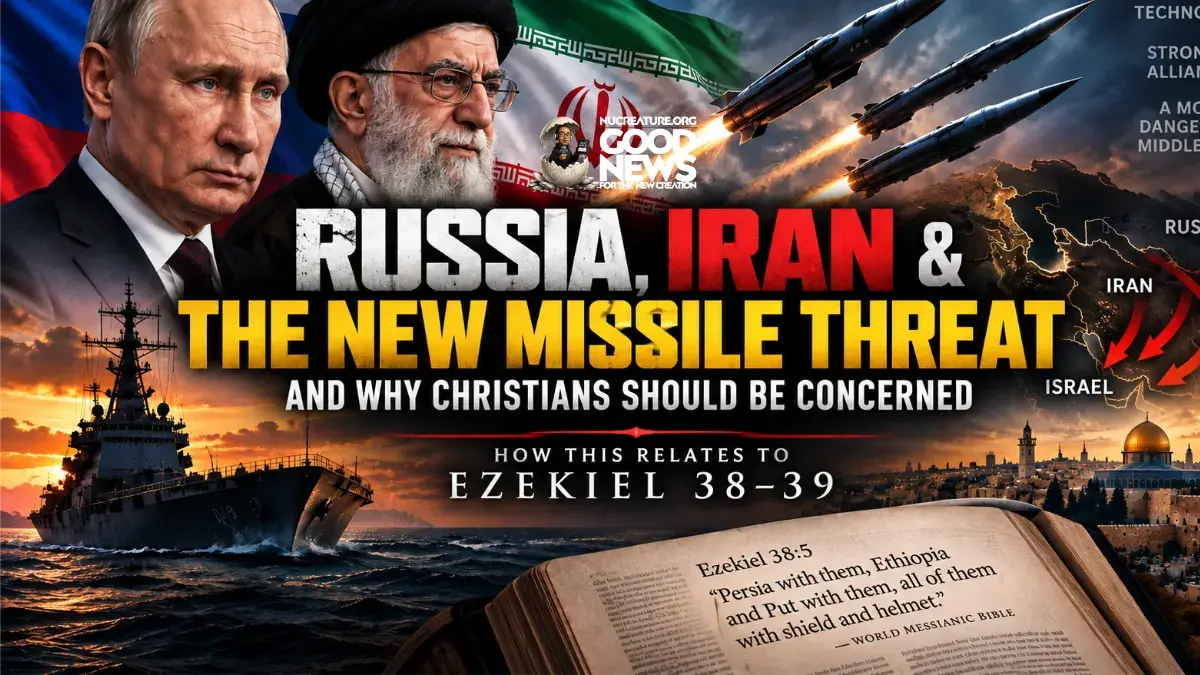

Searching for Russia in the Bible? This commentary explores the prophetic visions of Ezekiel regarding the leader of Magog and the ultimate intervention of God in human history.
📜 Historical Context & Background
- Prophet: Ezekiel (Jewish Priest and Prophet).
- Period: Taken captive by King Nebuchadnezzar in 597 B.C.
- Ministry: Commissioned at age 30 to speak to Jews in Babylonian exile.
- Focus of Chapters 38–39: Direct prophecies concerning the leader of Magog (Russia) and the Battle of Armageddon during the “latter years.”
🛡️ Ezekiel 38: The First Invasion
The Coalition of Nations (Verses 1–9, 14–16)
The Lord identifies specific modern-day territories that will form an alliance against Israel in the End Times.
| Biblical Name | Modern Interpretation/Region |
| Magog / Gog | Russia / The Leader of Russia |
| Persia | Iran |
| Ethiopia / Libya | North & East African Nations |
| Gomer | Eastern Europe |
| Togarmah | Turkey |
Key Prophetic Markers
- The Return of Israel (Verse 8): The invasion occurs after the Jewish people have been gathered out of many nations to dwell safely in their homeland.
- The Counterfeit Peace (Verse 11): Russia attacks when Israel is at “rest” and dwelling in “unwalled villages.”Note: This suggests a temporary, false peace potentially brokered by the Antichrist (see Daniel 9:27).
Divine Intervention (Verses 16–23)
God uses this conflict to manifest His power to nations that have rejected Him.
- The Great Earthquake (Verse 20): A massive tectonic event will cause mountains and walls to fall.
- Internal Strife (Verse 21): The invading alliance will turn on itself (“every man’s sword shall be against his brother”).
- Natural Disasters (Verses 22–23): Rain, fire, and hailstones will devour the armies.
⚔️ Ezekiel 39: The Second Invasion & Aftermath
This chapter details a second attempt by the Russian militia to attack Israel, coinciding with the global gathering described in Revelation 16 and 19.
The Decimation of the Alliance (Verses 2–5)
- First Invasion: God defeats the alliance, leaving only 1/6 of the forces alive.
- Second Invasion: Includes the “Kings of the East” (nations east of the Euphrates). They are ultimately defeated by the descent of Jesus Christ.
The Cleanup of the Land
Following the battle, two massive logistical efforts take place:
- Burning Weapons (Verse 9): Israel will use the abandoned weapons for fuel for seven years.
- Burying the Dead (Verses 11–12): It will take seven months to bury the fallen soldiers in the “Valley of Hamon-gog” to cleanse the land.
🔗 Cross-Reference: The Great Tribulation
The events in Ezekiel 38–39 are intrinsically linked to other major prophetic books:
- Daniel 11:40–44: Describes the “King of the North” (Russia/Magog) and the two invasions.
- Revelation 16:12–16: The gathering of the world’s armies at Armageddon.
- Revelation 19:11–15: The return of Christ on a white horse to judge and make war with the “sword of His mouth.”
🕊️ Conclusion: The New Jerusalem
The conclusion of the Ezekiel narrative (Chapters 39–46) parallels Revelation 21–22. After the destruction of the earthly enemies of God, the focus shifts to:
- The establishment of the Holy City (New Jerusalem).
- The eternal reign of Christ.
- The restoration of the relationship between God and humanity.
Final Thought: These chapters serve as a warning and a promise—that while the “bloodiest war” in history is prophesied, the ultimate victory and peace belong to the Lord.